
What Is the Difference Between a Blog and a Page?
Introduction
If you are building a website or managing content for SEO, one common question always comes up: what is the difference between a blog and a page? Many beginners use these terms interchangeably, but from an SEO, content strategy, and user-experience point of view, blogs and pages serve very different purposes.
As a digital marketer, Brijesh Makwana Digital Marketer often explains this difference to business owners, bloggers, and local brands who want better rankings and clarity in website structure. Understanding this topic properly can directly impact your traffic, conversions, and SEO performance.
In this detailed guide, you’ll learn:
- What a blog is
- What a page is
- Key differences between blog and page
- SEO impact of blogs vs pages
- When to use a blog or a page
- Common mistakes to avoid
What Is a Blog?
A blog is a regularly updated section of a website where content is published in chronological order (newest first). Blog posts are usually informational, educational, or opinion-based and are designed to attract traffic through search engines and social media.
Key Characteristics of a Blog
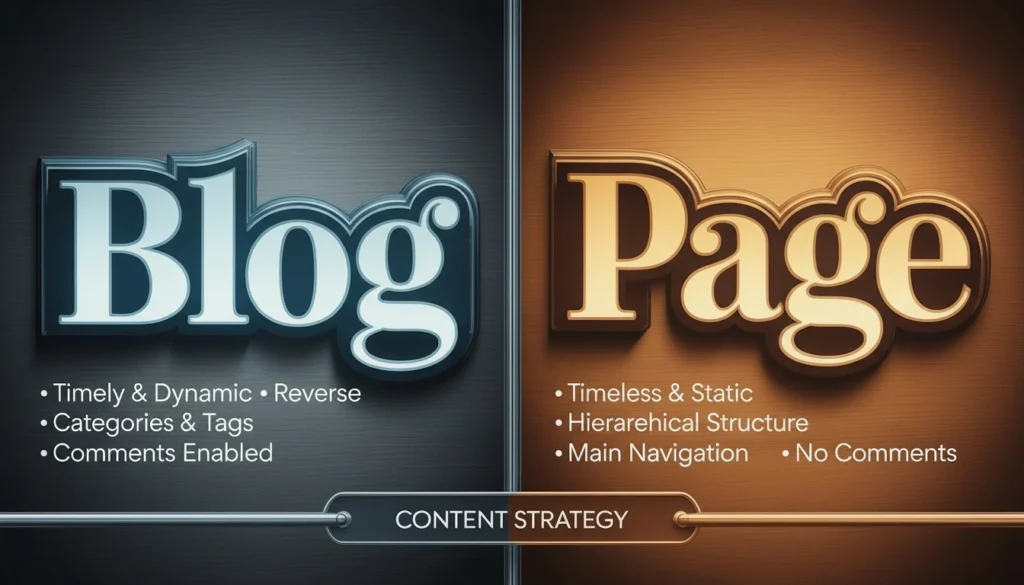
- Content is time-based and updated frequently
- Posts appear in reverse chronological order
- Allows comments and user engagement
- Ideal for SEO and organic traffic growth
- Supports categories and tags
Blogs are commonly used for:
- How-to guides
- News and updates
- Tutorials
- Industry insights
- Opinion pieces
For example, a digital marketing blog might publish posts like “SEO Trends for 2026” or “How Meta Ads Work for Local Businesses.”
What Is a Page?
A page is a static piece of content on a website that is not time-sensitive and does not change frequently. Pages are mainly used for essential information about a business, service, or brand.
Key Characteristics of a Page
- Static and evergreen content
- Not displayed by publish date
- Usually does not allow comments
- Focused on conversions or information
- Important for website structure
Common examples of pages include:
- Home page
- About Us page
- Contact page
- Services page
- Privacy Policy
For instance, Brijesh Makwana Digital Marketer uses pages to describe services like SEO, Google Ads, Social Media Marketing, and Website Development.
Difference Between Blog and Page (Comparison Table)
| Factor | Blog | Page |
|---|---|---|
| Content Type | Dynamic | Static |
| Update Frequency | Regular | Rare |
| SEO Purpose | Traffic generation | Conversions & branding |
| Publish Date | Visible | Usually hidden |
| Categories & Tags | Yes | No |
| Comments | Optional | Usually disabled |
| Best For | Education & awareness | Business information |
SEO Difference Between Blog and Page
From an SEO perspective, blogs and pages play different but complementary roles.
SEO Role of Blogs
Blogs are powerful for:
- Targeting long-tail keywords
- Ranking for informational search queries
- Internal linking opportunities
- Building topical authority
Search engines love fresh and useful content, which is why blogs help increase crawl frequency and organic reach.
SEO Role of Pages
Pages are optimized for:
- Commercial and transactional keywords
- Brand trust and authority
- Lead generation
- Conversion-focused searches
For example, a service page optimized for SEO Services in India works differently than a blog post optimized for What is SEO?
Blog vs Page: Content Strategy Perspective
A smart website uses both blogs and pages together.
How Blogs Support Pages
- Blogs internally link to service pages
- Blogs educate users before conversion
- Blogs attract top-of-funnel traffic
How Pages Support Blogs
- Pages build trust and credibility
- Pages convert blog readers into leads
- Pages improve site structure
According to Brijesh Makwana Digital Marketer, websites that combine educational blogs with strong service pages perform better in both traffic and lead quality.
When Should You Use a Blog?
Use a blog when:
- You want organic traffic from Google
- You are targeting informational keywords
- You plan to post content regularly
- You want social media sharing
Examples:
- “Difference between SEO and SEM”
- “How to run Meta Ads for beginners”
- “Best digital marketing tools”
When Should You Use a Page?
Use a page when:
- Content is permanent
- You want to describe services or company info
- The goal is lead generation
- The topic does not need frequent updates
Examples:
- About Brijesh Makwana Digital Marketer
- SEO Services Page
- Contact Page
Common Mistakes People Make
1. Using Blog Posts as Service Pages
Many beginners create long blog posts instead of proper service pages, which reduces conversions.
2. Posting Evergreen Content as Blogs Only
Some content should be a page, not a blog, especially if it defines your core business.
3. Poor Internal Linking
Blogs without internal links to pages waste SEO potential.
Internal Linking Strategy (Important)
To maximize SEO benefits:
- Link blog posts to relevant service pages
- Link pages back to helpful blogs
- Use descriptive anchor text
Example Internal Links
- Learn more about our SEO Services
- Explore Google Ads Management solutions
- Check Social Media Marketing services
- Visit our E-commerce Marketing page
These internal links help users and search engines understand your website better.
Infographic Content Idea
Title: Blog vs Page – What’s the Difference?
Sections for Infographic:
- Definition of Blog
- Definition of Page
- Key Differences (Visual Icons)
- SEO Role Comparison
- When to Use Blog vs Page
- Final Recommendation
This infographic can be shared on Pinterest, LinkedIn, and blogs for backlink opportunities.
Final Thoughts
Understanding the difference between blog and page is essential for building a successful website and SEO strategy. Blogs drive traffic, visibility, and authority, while pages drive trust, structure, and conversions.
As explained by Brijesh Makwana Digital Marketer, the real power comes when both are used together strategically. If you want higher rankings, better engagement, and more leads, make sure your website has a clear balance between blogs and pages.
Thanks for reading! If you found this guide helpful, explore our other blogs and service pages to learn more about SEO, digital marketing, and online growth.